Training For Schools & Educators
Addressing Complex and Dangerous Behaviours Through a Brain-Based, Relationship-Centred Approach
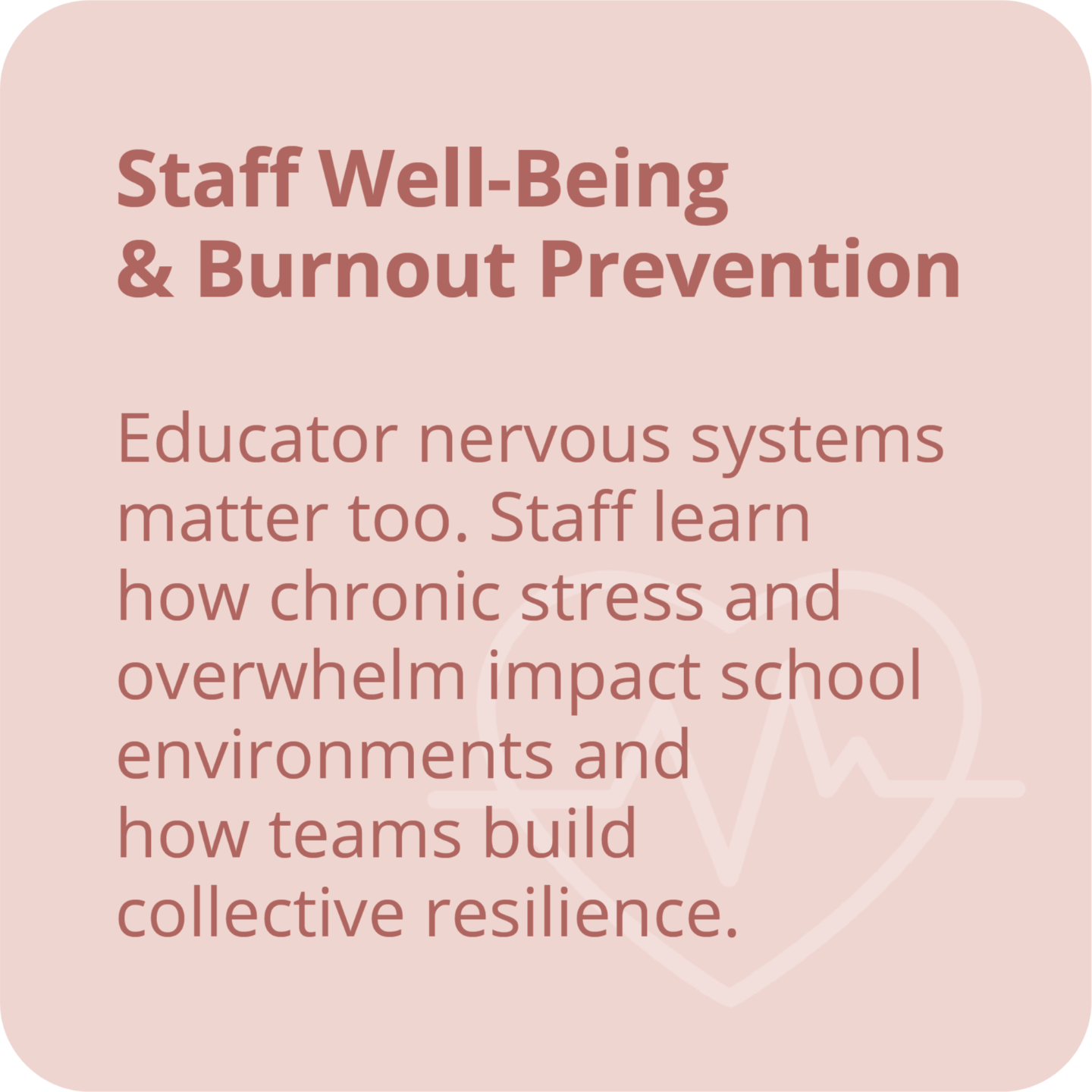
Schools are seeing increasing levels of aggression, emotional dysregulation, classroom evacuations, and staff burnout. Traditional approaches are leaving educators overwhelmed. This training was developed to help schools respond differently.

The challenge
This is not just another behaviour training
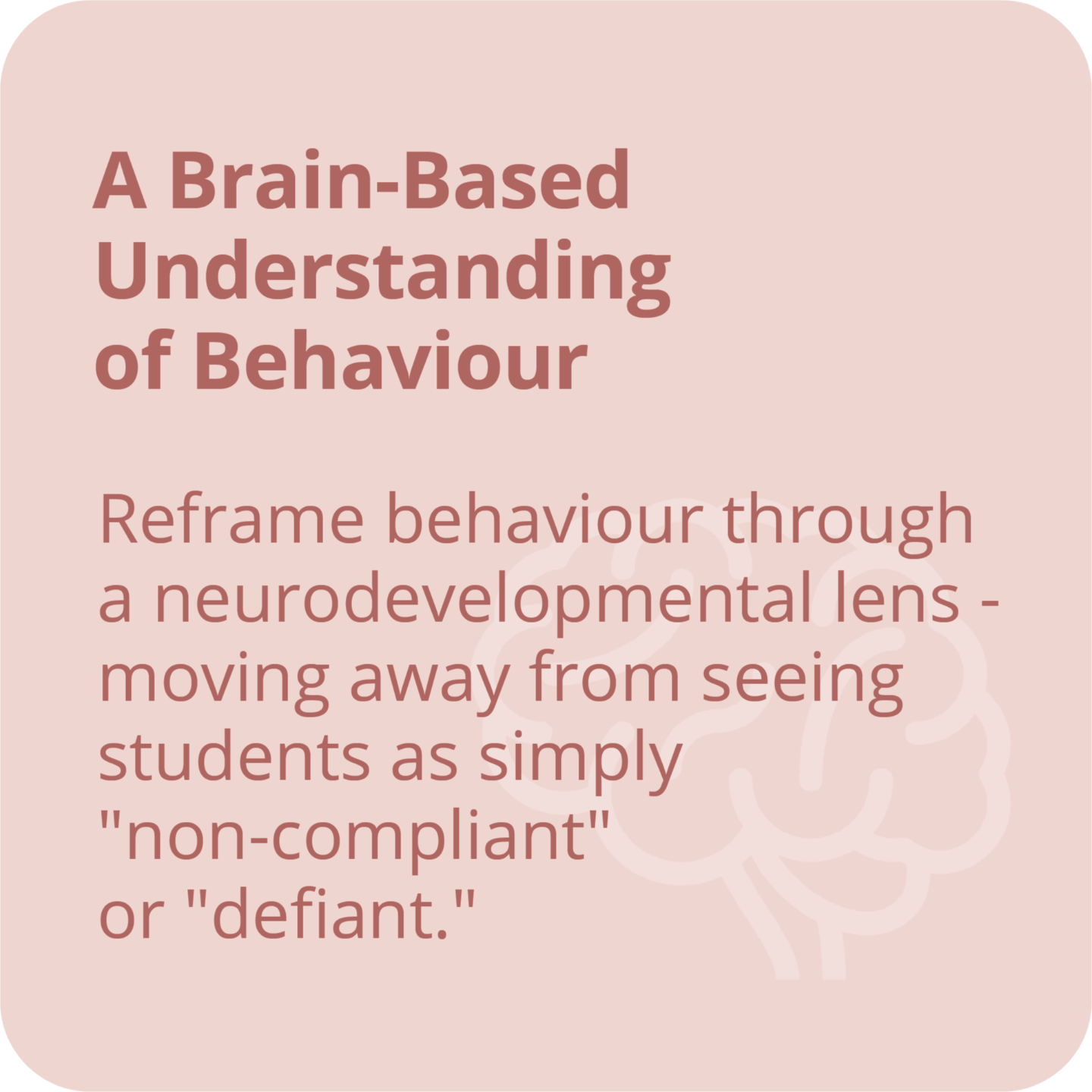
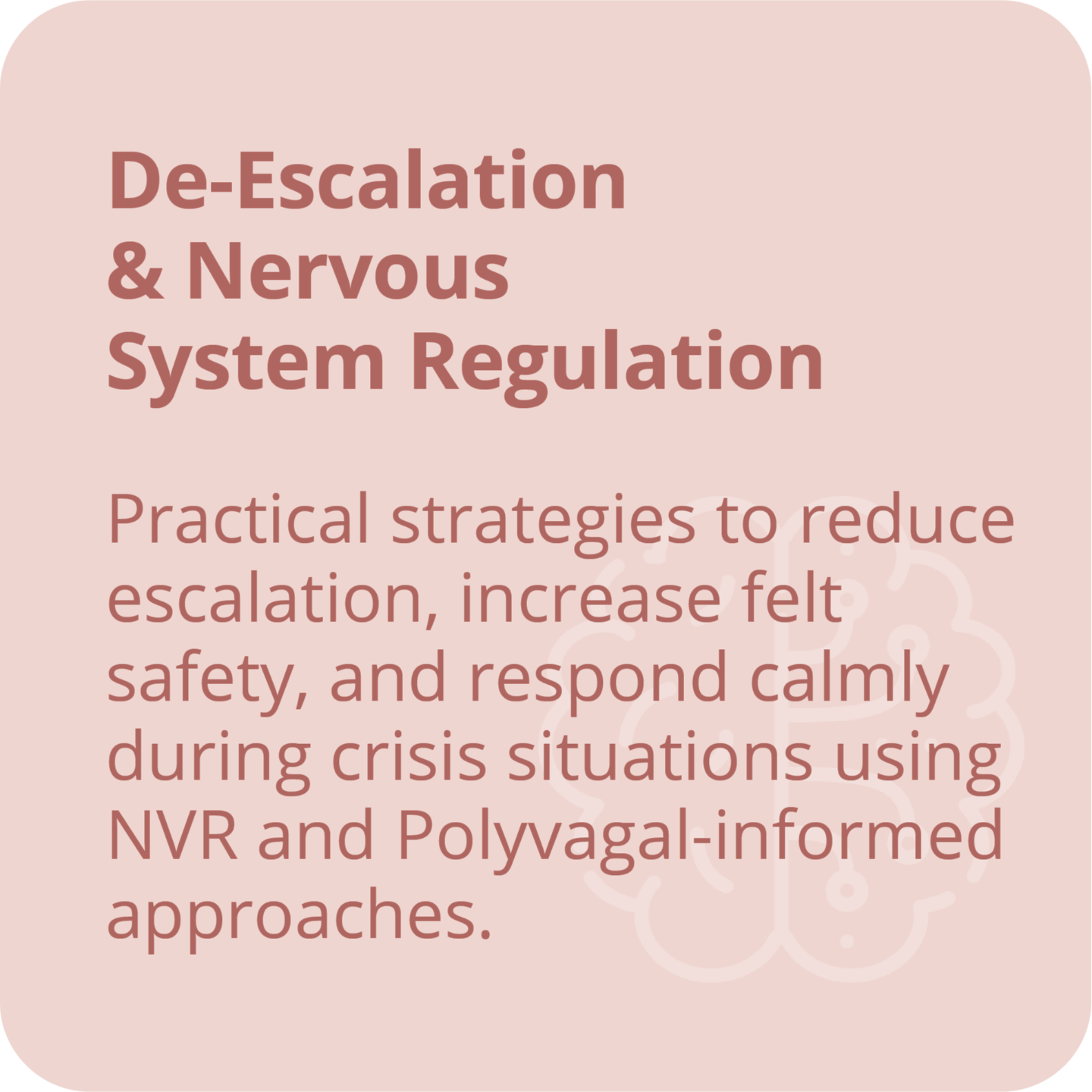
Grounded in neuroscience, trauma-informed care, Polyvagal Theory, and Nonviolent Resistance (NVR), this approach helps educators and school systems move beyond behaviour management and toward safer, more connected, and more sustainable responses to complex behaviour.
Traditional behaviour approaches are often leaving educators overwhelmed, unsupported, and unsure of what to do next — particularly when faced with escalating aggression, school refusal, and fractured school-family relationships.
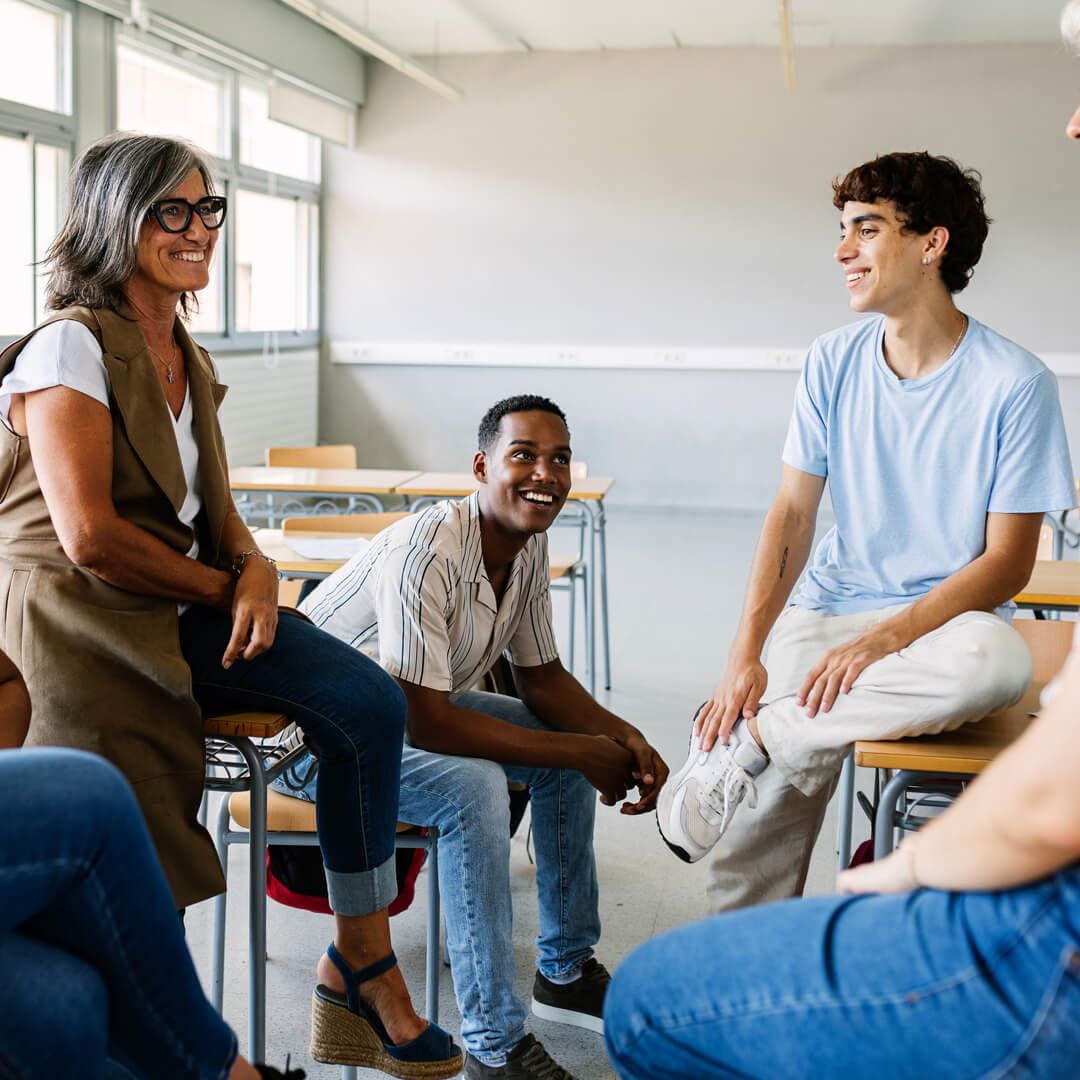
It is a shift in how schools understand behaviour, support nervous systems, and strengthen relationships around students.
What Makes This Training Different
This is not just another behaviour training

This training helps
educators understand:

and de-escalation
make situations worse
dignity, and relationships
Participants learn practical tools that can immediately be applied within classrooms, student support teams, and school systems.
Five areas of practical transformation
This training includes:





The Goal
The goal is not simply to "manage behaviour"

The goal is to create school environments where:
- Students feel safer and more understood
- Educators feel more equipped and supported
- Families feel respected rather than blamed
- Teams respond with greater coherence and confidence
- Relationships are preserved, even during difficult moments
Because when nervous systems feel safer, schools function better.
Ready to bring this training to your school? Get in touch
Dr. Champagne is available to present at conferences, webinars, podcasts, and a wide range of professional events.
Grounded in neuroscience and applied research, her work brings clarity, depth, and compassion to complex and sensitive topics, fostering meaningful dialogue across diverse audiences.
Planning an event or interested in working together?
Fill out the form below